
How to Communicate Effectively with Your Child’s Teacher in the New Year
Key Takeaways
- January is an ideal time to check in with your child’s teacher and reset goals for the second term.
- Clear, respectful communication builds partnership rather than pressure.
- Preparing specific questions helps make limited teacher time more productive.
- Focusing on collaboration—not blame—leads to better outcomes for students.
- When additional support is needed, outside programs can complement classroom instruction.
As the new year begins, you may be reflecting on the first half of the school year. Maybe your child’s grades weren’t quite what you hoped. Or perhaps, as homework has become more challenging, your child seems less confident than they were in the fall.
January is a natural moment to pause, reset, and ask an important question: How can I best support my child moving forward?
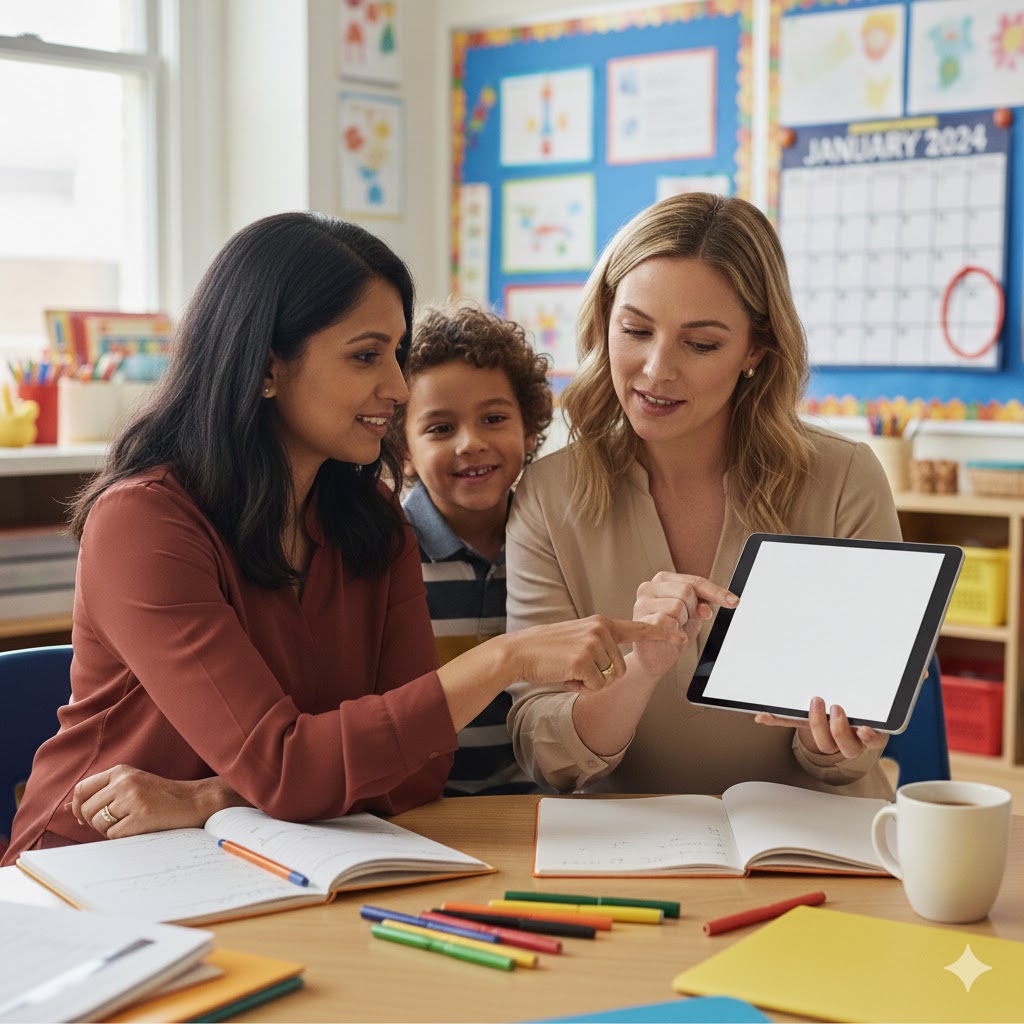
One of the most powerful places to start is with effective communication between parents and teachers. When done well, it creates clarity, partnership, and momentum for your child.
Why Communication with Your Child’s Teacher Matters
Teachers want your child to succeed. Parents want the same thing. But busy schedules, large classrooms, and limited conference time can sometimes make teacher-parent communication feel rushed or intimidating.
Effective communication bridges that gap. It allows you to:
- Understand how your child is really doing in class.
- Identify patterns or challenges early.
- Align expectations at home and at school.
- Work together on a plan that supports your child’s growth.
Parental involvement ensures that parents and teachers are on the same team, helping students feel supported rather than singled out.
How to Start with Curiosity, Not Concern
It’s completely natural to approach a teacher conversation with worry or frustration, especially if your child is struggling. But leading with curiosity sets a much more productive tone.
Instead of opening with:
“Why is my child falling behind?”
Try:
“I’d love to understand how my child is doing in class and where they might need extra support.”
This reframing invites collaboration rather than potentially raising defensiveness and shows respect for the teacher’s perspective and expertise.
How You Can Prepare Before You Reach Out
As teachers manage many students, emails, and responsibilities, your understanding and a little preparation will go a long way toward making your conversations focused and effective.
Before contacting your child’s teacher, take time to:
- Review recent assignments, tests, and feedback.
- Talk with your child about what feels hard or confusing.
- Write down specific questions or observations.
Helpful questions might include:
- Are there specific skills my child is struggling with?
- Is this a content issue, a confidence issue, or both?
- What strategies seem to help my child in the classroom?
- How can we best support learning at home?
Prepared conversations respect everyone’s time and lead to clearer next steps.
Why Choosing the Right Communication Channel Matters
Not every concern needs an immediate meeting, and every question shouldn’t be handled through email.
Email works well for:
- Scheduling a meeting.
- Asking clarifying questions.
- Sharing brief observations.
A conference or call is better for:
- Ongoing academic concerns.
- Emotional or behavioral changes.
- Creating a support plan.
If you’re unsure of how to begin communication, start with a short, respectful email asking for guidance on the best way to connect. This approach sets a collaborative tone between you and your child’s teacher.
How to Keep the Focus on Support
Even when challenges exist, framing the conversation around solutions keeps it constructive.
Helpful language to communicate with your child’s teacher includes:
- “What strategies are working well in class?”
- “How can we reinforce this skill at home?”
- “What progress should we look for over the next few weeks?”
Avoid placing blame on your child or the teacher. Most learning struggles are complex and benefit from shared problem-solving rather than finger-pointing.
Why Following Up and Staying Engaged Is Important
One conversation is often just the beginning. After speaking with your child’s teacher:
- Summarize next steps as you understand them in an email so that everyone is aligned, or the teacher can provide clarification.
- Check in periodically on progress.
- Continue talking with your child about how they’re feeling in class.
Communication consistency shows your child that learning matters and that supporting their success is ongoing instead of reactive.
When Extra Support Can Help
Sometimes, even with strong communication, a child needs additional reinforcement beyond the classroom. That’s where supplemental support can play a valuable role.
Programs like those at Best in Class Education Center work alongside schools to:
- Reinforce key academic skills.
- Build confidence and learning strategies.
- Provide small group or individualized attention that classrooms can’t always offer.
When parents, teachers, and outside support work together, students gain confidence that reaches far beyond the classroom.
Partner with Best in Class Education Center to Support Your Child’s Classroom Outcomes
At Best in Class Education Center, we believe communication and collaboration are essential to student success. Our private tutoring and enrichment programs are designed to complement classroom learning while keeping you informed and engaged.
If you’re heading into the second term with questions or concerns, we’re here to support your child’s academic journey one clear step at a time. Contact us today!
Frequently Asked Questions for How to Communicate Effectively with Your Child’s Teacher in the New Year
Why is January a good time to contact my child’s teacher?
January is an ideal time to check in, especially after the first report card or as new academic units begin. By January, you’ve had some time to see how your child is doing overall and likely have a good sense of any concerns that may be impeding your child’s progress.
What if I’m worried about bothering the teacher?
Teachers expect and value thoughtful communication. Being respectful, prepared, and concise shows appreciation for their time.
How often should parents communicate with teachers?
There’s no one-size-fits-all answer. Reach out when concerns arise or when clarification is needed, rather than waiting until problems escalate.
What if my child is embarrassed about me contacting the teacher?
Frame the conversation as teamwork. Let your child know the goal is support, not punishment or criticism.Can tutoring help if the teacher says my child is “doing fine,” but I’m still unsure?
Yes. Tutoring can strengthen skills, build confidence, and help students move from “doing fine” to feeling confident and capable.
